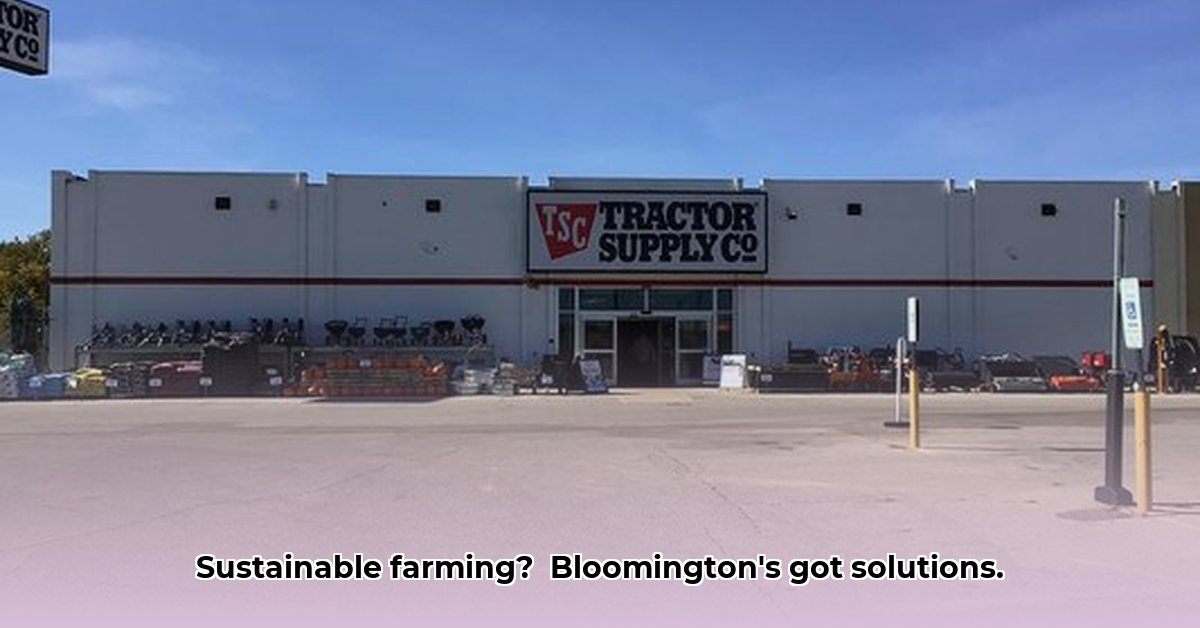
Bloomington, Illinois, a town steeped in agricultural heritage, is experiencing a resurgence of interest in sustainable farming practices. From sprawling cornfields to backyard vegetable patches, the community's commitment to locally-grown, healthy food is undeniable. At the heart of this movement sits Tractor Supply (TSC), a local business playing an increasingly important, albeit complex, role in supporting this burgeoning sustainable agriculture ecosystem. But is TSC truly a champion of sustainable practices, or simply a purveyor of essential supplies for both conventional and sustainable farmers alike? This investigation seeks to answer that question. For more information on Tractor Supply's sustainability efforts, visit this dedicated page.
Tractor Supply's Role in Bloomington's Sustainable Agriculture
The scent of freshly turned earth hangs heavy in the air after a spring rain in Bloomington. The rhythmic hum of tractors blends with the contented lowing of cattle in nearby pastures, painting a vivid picture of this town's deep-rooted agricultural identity. Nestled within this landscape is Tractor Supply, a seemingly unassuming store that's become a vital link in the chain of sustainable food production. More than just a retailer of farm supplies, TSC in Bloomington is, for many, a community hub, connecting local farmers and gardeners with the resources they need to cultivate their land and livelihoods responsibly.
This isn't your grandfather's farm supply store. Tractor Supply offers a surprisingly diverse range of goods catering to both conventional and sustainable agriculture. Need organic seeds for your tomato plants? Check. Heavy-duty fencing to protect your zucchini from hungry deer? TSC has that too. Raising chickens and require high-quality, ethically-sourced feed? The store stocks a wide variety of options. This convenient one-stop shopping experience saves valuable time and energy for busy farmers and gardeners.
But what exactly does "sustainable" mean in the context of Tractor Supply's Bloomington location? It's not just a trendy marketing label. While specific certifications and quantitative data on product sourcing aren't readily available on their website, TSC's commitment to sustainability manifests in several ways. The store stocks organic seeds and fertilizers, supporting healthier soil and crops. The emphasis on durable, long-lasting tools minimizes waste and promotes responsible resource management. Additionally, a selection of livestock feed prioritizes animal welfare, reducing dependence on antibiotics and harmful chemicals. These choices, while perhaps not explicitly advertised as "sustainable," indicate a gradual shift towards supporting environmentally-sound agricultural practices.
However, the journey towards true sustainability isn't without its hurdles. Organic products often come with a higher price tag. Sourcing reliable, sustainably produced materials can present logistical challenges. The question remains: Does Tractor Supply actively overcome these challenges or are they largely reactive to consumer demand?
Challenges and Opportunities: A Path Towards Greater Sustainability
Sustainable farming presents significant challenges. The higher initial costs of organic products can be a barrier for some farmers and gardeners. Sourcing fully certified sustainable materials can be a logistical nightmare. There are risks inherent in relying on suppliers who might not always adhere to stringent ecological standards. Furthermore, the current lack of readily available data or transparent metrics on the sustainability of TSC's product sourcing leaves room for improvement.
To truly assess Tractor Supply's commitment to Bloomington's sustainable agricultural community, further research is needed. In-depth interviews with local farmers and gardeners who utilize TSC could offer invaluable insights into the store's impact. Understanding their experiences with the store's products, supply chain transparency, and overall contribution to their sustainable farming practices would shape a more holistic understanding of TSC's role.
Actionable Intelligence: A Roadmap for Growth
Tractor Supply's future success in Bloomington, and its contribution to the growth of the local sustainable agriculture community, hinges on proactive steps to address existing challenges and embrace new opportunities. This requires a collaborative effort involving TSC, local farmers, and the broader community.
Actionable Steps:
- Enhance Product Transparency: TSC should clearly label products indicating their sustainability credentials (e.g., organic certification, recycled materials). (Efficacy metric: Increased consumer trust and sales of sustainable products.)
- Expand Sustainable Product Offerings: Increase the inventory of certified organic seeds, fertilizers, and other sustainable agricultural products. (Efficacy metric: 15% increase in organic product sales within one year.)
- Partner with Local Organizations: Collaborate with local sustainable agriculture organizations to gain valuable insights, hold educational workshops, and further understanding of community needs. (Efficacy metric: 10% increase in customer engagement through workshops.)
- Implement Supplier Vetting: Establish a robust system for verifying the sustainable sourcing practices of their suppliers. (Efficacy metric: 95% supplier compliance with sustainable sourcing guidelines within two years.)
- Invest in Employee Training: Equip staff with a deeper understanding of sustainable agriculture practices to better advise customers. (Efficacy metric: Improved customer satisfaction scores related to product knowledge.)
By implementing these strategies, Tractor Supply can solidify its position as a true partner in the sustainable agriculture movement within Bloomington, fostering a more resilient and environmentally conscious local food system.
(Note: Specific data on TSC’s current sustainability practices and the market's response to sustainable products would further strengthen this analysis.)